The field of video game archaeology has long occupied a curious space between academic rigor and passionate hobbyism. For decades, enthusiasts have painstakingly preserved gaming history through ROM collections, hardware restoration, and oral histories of development teams. Now, a growing movement seeks to formalize this practice through accredited degree programs, challenging traditional notions of what constitutes legitimate cultural preservation.
Universities worldwide are beginning to recognize game preservation as a serious academic discipline. The University of California, Santa Cruz made waves in 2020 by launching the first graduate program focused specifically on game history and preservation. Their curriculum combines traditional archival methods with cutting-edge techniques for preserving born-digital materials. Students learn to analyze source code, conduct developer interviews, and create emulation frameworks that maintain the authentic feel of vintage gaming experiences.
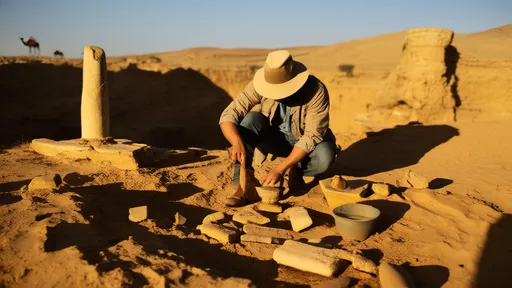
What makes game archaeology particularly complex is the medium's inherent ephemerality. Unlike ancient pottery shards or medieval manuscripts, digital games exist in a constant state of technological obsolescence. Preservationists must contend with deteriorating magnetic media, proprietary hardware architectures, and the gradual loss of institutional knowledge as pioneering developers age. The field requires equal parts historian, computer scientist, and cultural anthropologist - a rare combination that traditional archaeology programs rarely address.
Industry veterans have greeted these academic developments with cautious optimism. Many retired developers see formal preservation programs as validation of their life's work, while others worry about institutional gatekeeping. "We've been doing this work in basements and convention halls for thirty years," remarked one anonymous collector. "Now universities want to put letters after our names and tell us how to do it properly." This tension between grassroots preservation efforts and academic certification continues to shape conversations within the community.
The practical applications of game archaeology extend far beyond nostalgia. Legal scholars increasingly rely on preserved development documents to untangle complex copyright cases. Museum curators use archaeological methods to authenticate rare prototypes and determine appropriate conservation techniques. Perhaps most surprisingly, contemporary game designers frequently study vintage code and design documents to solve modern development challenges - proving that even "obsolete" games still have lessons to teach.
As the field matures, ethical questions emerge with increasing urgency. Should archivists preserve every bug and glitch, or "fix" historical software for modern audiences? How should institutions handle games containing offensive content by contemporary standards? These debates mirror larger conversations in digital preservation but take on unique dimensions when applied to interactive media. The answers may well define whether future generations experience gaming history as a living continuum or a sanitized museum exhibit.
What remains undeniable is gaming's cultural significance as the dominant art form of the digital age. Like cave paintings, Greek theater, or Renaissance frescoes before it, interactive entertainment deserves rigorous scholarly attention. The archaeologists digging through lines of 6502 assembly code today might well be remembered as the Champollions of our era - decipherers of a cultural language future generations will struggle to comprehend without their work.

By /Aug 15, 2025

By /Aug 15, 2025

By /Aug 15, 2025

By /Aug 15, 2025

By /Aug 15, 2025

By /Aug 15, 2025

By /Aug 15, 2025

By /Aug 15, 2025
By /Aug 15, 2025

By /Aug 15, 2025

By /Aug 15, 2025

By /Aug 15, 2025
By /Aug 15, 2025

By /Aug 15, 2025

By /Aug 15, 2025

By /Aug 15, 2025

By /Aug 15, 2025

By /Aug 15, 2025

By /Aug 15, 2025

By /Aug 15, 2025