In the high-stakes world of competitive gaming and professional sports, dynamic visual acuity is a critical yet often overlooked component of peak performance. As players engage in rapid-fire matches or endurance tournaments, their eyes are subjected to unprecedented strain. The gradual decay of dynamic vision—the ability to track moving objects with precision—can mean the difference between championship glory and early elimination. Understanding and preventing this decline has become a pressing concern for athletes, coaches, and sports medicine specialists alike.
The human visual system wasn’t designed for the demands of modern competition. Where our ancestors tracked prey across savannas, today’s esports athletes must follow pixel-perfect movements across screens while processing complex UI elements. Traditional sports present different challenges—a tennis ball crossing the net at 130 mph leaves roughly 250 milliseconds for visual processing and reaction. This constant high-speed tracking creates cumulative fatigue that manifests in decreased performance, slower reaction times, and increased error rates as tournaments progress.
Screen-based competitors face unique phototoxic threats that physical sport athletes don’t encounter. The combination of blue light exposure, flicker rates, and contrast ratios in gaming monitors creates a perfect storm for visual fatigue. Studies of professional League of Legends players show a 12-18% decrease in target acquisition accuracy during best-of-five series, with the steepest drops occurring during final matches. This isn’t merely exhaustion—it’s physiological degradation of the eyes’ ability to maintain focus on rapidly moving interface elements.
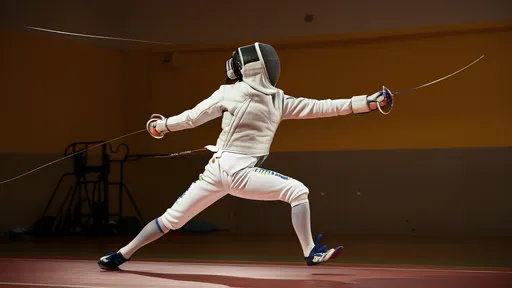
Traditional athletes contend with environmental factors that digital competitors avoid, but pay their own visual toll. Baseball outfielders tracking fly balls under stadium lights experience retinal afterimages from the bright floodlights. Soccer goalkeepers facing rapid transitions from shaded penalty areas to sunlit fields suffer temporary contrast sensitivity loss. These aren’t minor inconveniences—at elite levels, a 5% decrease in dynamic visual acuity can turn a .300 hitter into a .240 liability.
The neuroscience behind visual decay reveals why prevention beats treatment. When retinal ganglion cells fire repeatedly at high frequencies, they temporarily deplete neurotransmitters needed for motion detection. This isn’t corrected with glasses or surgery—it’s a functional limitation of our biological hardware. The visual cortex similarly experiences processing fatigue, struggling to maintain edge detection and motion prediction accuracy after prolonged intense use. Like a CPU throttling performance to prevent overheating, our visual system slows down to protect itself.
Emerging preventive strategies focus on pre-competition preparation as much as in-game management. Targeted eye exercises that strengthen saccadic movements show particular promise. One Bundesliga team has players follow laser projections through increasingly complex patterns during warmups, priming their ocular muscles much like stretching prepares hamstrings. Esports organizations are adopting similar techniques, with some teams using specialized software that trains peripheral awareness while deliberately inducing controlled visual stress to build tolerance.
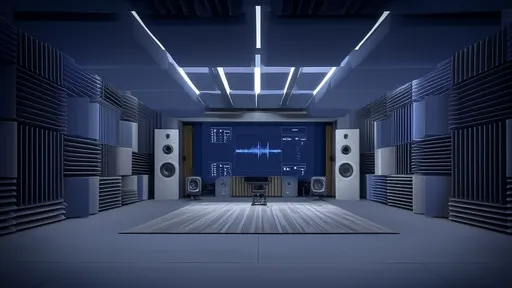
Environmental modifications play an equally crucial role in preservation. The lighting conditions surrounding competition spaces require careful calibration—too dim and pupils dilate excessively, too bright and glare becomes problematic. Smart teams now employ lux meters to ensure practice facilities match tournament conditions. Even subtle factors like wall color (matte neutral gray reduces eye strain compared to white) and monitor height (slightly below eye level minimizes eyelid exposure) contribute to visual sustainability during long sessions.
Nutritional interventions have moved beyond carrots and vitamin A clichés. Competitive organizations now incorporate lutein and zeaxanthin supplements—carotenoids that accumulate in the macula and act as natural blue light filters. Omega-3 fatty acids show particular promise in maintaining cell membrane fluidity in photoreceptors. Hydration protocols have grown more sophisticated as well, recognizing that even mild dehydration thickens the vitreous humor, slightly distorting light transmission to the retina.
Perhaps the most revolutionary approach involves intentional visual downtime. Where athletes traditionally focused on physical recovery, forward-thinking coaches now schedule "dark room" periods where players rest in light-deprived environments. This isn’t merely napping—the complete absence of visual stimuli allows the entire optical pathway to reset. Early adopters report measurable improvements in late-game tracking accuracy, particularly during endurance competitions.
The cutting edge of prevention may lie in biometric feedback systems. Several Formula 1 teams now use pupil-tracking cameras during simulator sessions, building personalized models of visual fatigue. When a driver’s pupils show telltale signs of exhaustion (slower contraction speeds, reduced dilation range), the system triggers targeted rest periods. Similar technology is migrating to esports, where webcam-based eye tracking can alert players to subtle degradation before conscious perception kicks in.
Legacy training methods are being reevaluated through this lens. Marathon practice sessions—once considered essential for building stamina—are now recognized as potentially harmful to long-term visual health. Progressive organizations implement the 90/20 rule: 90 minutes of focused training followed by 20 minutes of complete visual rest. This matches the natural ultradian rhythm of human concentration while preventing cumulative strain.
Equipment selection has evolved into a science of ocular ergonomics. Gone are the days of choosing monitors based solely on refresh rates or resolution. Professional gamers now consider factors like backlight strobing accuracy and black frame insertion capabilities—features that reduce motion blur without increasing eye strain. Tennis players experiment with different sunglass tints for specific lighting conditions, understanding that the wrong filter can worsen rather than improve contrast sensitivity.
The psychological component cannot be overstated. Competitive stress triggers pupil dilation and alters blink rates—both of which impact dynamic vision. Mindfulness training that regulates autonomic nervous system responses indirectly preserves visual acuity during critical moments. Some teams employ "blink coaches" who remind players to maintain healthy blink patterns during intense sequences, preventing the dry eyes that plague many competitors.
Looking ahead, the frontier of visual preservation may involve neuroplasticity training. Early studies suggest that alternating between different types of visual tasks (e.g., target tracking followed by pattern recognition) builds more resilient neural pathways than repetitive drills. This aligns with broader trends in sports science emphasizing variability over rote repetition. The athletes who will dominate tomorrow’s competitions may be those whose training regimens treat their visual system with the same specificity as their muscles.
What becomes clear is that dynamic visual acuity isn’t a fixed gift, but a trainable, protectable resource. The organizations investing in comprehensive visual health programs are seeing returns not just in immediate performance metrics, but in career longevity. As one League of Legends coach put it, "We used to retire players when their reflexes slowed. Now we realize we were often retiring their eyes." In the arena where milliseconds separate champions from also-rans, preserving those milliseconds has become the new competitive frontier.

By /Aug 15, 2025

By /Aug 15, 2025
By /Aug 15, 2025

By /Aug 15, 2025

By /Aug 15, 2025

By /Aug 15, 2025

By /Aug 15, 2025

By /Aug 15, 2025

By /Aug 15, 2025

By /Aug 15, 2025

By /Aug 15, 2025

By /Aug 15, 2025

By /Aug 15, 2025

By /Aug 15, 2025

By /Aug 15, 2025

By /Aug 15, 2025
By /Aug 15, 2025
By /Aug 15, 2025

By /Aug 15, 2025

By /Aug 15, 2025