DNA Storage Parallelization in Writing Process

Aug 15, 2025 By

The field of DNA data storage has reached an inflection point where researchers are no longer asking if biological molecules can serve as viable archival media, but rather how quickly and at what scale we can implement this revolutionary technology. At the heart of this transition lies the critical challenge of write parallelization - the ability to simultaneously encode digital information across multiple DNA strands without compromising data integrity or synthesis accuracy.

Breaking the Serial Bottleneck

Traditional DNA synthesis methods have followed a fundamentally serial approach, building oligonucleotides one nucleotide at a time in sequential chemical reactions. This molecular assembly line, while reliable for research applications, becomes prohibitively slow when attempting to write even modest datasets. A single megabyte of data encoded in DNA requires the synthesis of millions of unique oligonucleotides - a task that could take months using conventional techniques.

Recent breakthroughs in parallel synthesis technologies are shattering this bottleneck. Companies like Molecular Assemblies and DNA Script have developed enzymatic synthesis platforms that can simultaneously grow thousands of distinct DNA strands. Unlike phosphoramidite chemistry which builds strands sequentially, these enzymatic methods leverage nature's own replication machinery to add bases in parallel across multiple growing strands.

The Spatial Parallelization Revolution

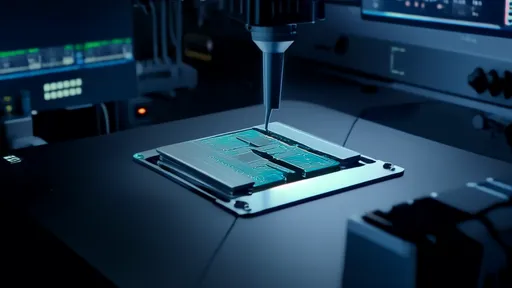
Perhaps the most promising approach comes from spatial addressing techniques adapted from semiconductor manufacturing. Researchers at the University of Washington and Microsoft Research have demonstrated DNA synthesis on silicon chips containing thousands of microscopic wells. Each well functions as an independent reaction chamber where unique DNA sequences can be synthesized simultaneously. This method, reminiscent of how computer chips contain billions of transistors operating in parallel, could theoretically scale to millions of parallel synthesis sites.

What makes spatial addressing particularly powerful is its compatibility with existing photolithography equipment. By repurposing tools developed for computer chip fabrication, scientists can leverage decades of semiconductor industry advancements in miniaturization and parallel processing. Early prototypes have shown the ability to write hundreds of thousands of unique DNA sequences in a single run, with synthesis densities approaching 10 million features per square centimeter.

Error Correction in Parallel Systems

As with any parallel system, error rates become magnified with scale. Traditional DNA synthesis might produce error rates around 1 in 100 bases, which becomes unacceptable when writing billions of bases simultaneously. New error correction methods are proving critical to making parallel DNA writing viable.

Forward error correction schemes adapted from telecommunications are being implemented at the molecular level. By encoding redundant information across multiple strands and using consensus algorithms during sequencing, researchers can achieve effective error rates below 1 in 10,000 - approaching what's needed for commercial data storage applications. Some teams are even incorporating error-detecting nucleotides directly into the synthesis process, allowing for real-time quality control during parallel writing.

Molecular Addressing and Random Access

True parallelization requires more than just simultaneous synthesis - it demands the ability to selectively access specific data segments within vast molecular libraries. Recent work in PCR-based addressing has shown promise, using unique primer binding sites as molecular "address lines" that can selectively amplify desired data blocks from a complex mixture.

More innovative approaches are borrowing concepts from computer memory architecture. Researchers at ETH Zurich have demonstrated a hierarchical addressing system where DNA strands contain both local addresses (similar to RAM addresses) and broader block identifiers (akin to memory banks). This two-tier system allows for efficient random access while maintaining high storage densities.

The Role of Machine Learning

Optimizing parallel DNA writing presents a multidimensional challenge that's perfectly suited for machine learning approaches. Neural networks are being employed to predict optimal encoding schemes, minimize synthesis errors, and even design DNA sequences that resist degradation during storage.

At Stanford's Bioengineering Department, researchers have developed reinforcement learning systems that continuously improve synthesis conditions based on real-time feedback from millions of parallel reactions. These AI "controllers" can adjust temperature, pH, and reagent concentrations across different regions of synthesis chips to maximize yield and accuracy.

Scaling Challenges and Economic Realities

While the technical achievements are impressive, significant hurdles remain before parallel DNA writing reaches commercial viability. The current cost per megabyte stored in DNA remains orders of magnitude higher than magnetic or optical storage, though the cost curve is following a steep downward trajectory similar to DNA sequencing costs a decade ago.

Perhaps the most pressing challenge is developing a complete ecosystem around DNA data storage. Parallel writing is just one component - we equally need advances in parallel reading, long-term preservation, and standardized encoding formats. Industry consortia are beginning to form around these challenges, with organizations like the DNA Data Storage Alliance working to establish technical standards and use cases.

Biological vs. Synthetic Approaches

An interesting philosophical divide has emerged in the field between purely synthetic approaches and those that leverage biological systems. Some researchers argue that the most scalable path forward involves engineering living cells to act as parallel DNA writers, essentially programming bacteria to encode data through their natural replication processes.

Others maintain that completely synthetic, cell-free systems offer better control and avoid the complications of biological variability. Recent hybrid approaches suggest there may be a middle ground - using purified biological enzymes in controlled synthetic environments to get the best of both worlds.

The Road Ahead

As parallel writing techniques mature, we're beginning to see the first glimmers of practical DNA storage systems. Earlier this year, a collaboration between Twist Bioscience and Microsoft successfully stored and retrieved over 1GB of data in DNA - small by conventional storage standards, but a watershed moment for molecular data storage.

The coming years will likely see exponential growth in both capacity and speed as parallelization techniques improve. Some projections suggest we could see petabyte-scale DNA archives within a decade, with write speeds approaching those of early hard drives. While DNA may never replace flash storage for everyday computing, its potential as an ultra-dense, long-term archival medium is becoming increasingly undeniable.

What makes this technological trajectory particularly exciting is how it represents a true convergence of biology and information technology. The tools of computer science are being applied to biological systems, while biological principles are inspiring new computing architectures. In this interdisciplinary space, DNA data storage stands as one of the most tangible examples of how these fields can transform each other.

The parallelization of DNA writing isn't just an engineering challenge - it's a fundamental rethinking of how we approach information storage at the most basic level. As we learn to harness the innate parallelism of molecular systems, we may be witnessing the birth of an entirely new paradigm in data storage, one that could preserve humanity's knowledge for millennia to come.

Recommend Posts
IT

Cognitive Load in Remote Teams

By /Aug 15, 2025

The rise of remote work has fundamentally altered how teams collaborate across distances. While this shift offers unprecedented flexibility, it also introduces unique cognitive challenges that traditional office environments rarely encountered. Remote teams now grapple with invisible barriers that impact how information is processed, shared, and retained across digital channels.
IT

Brain-Computer Interface Thought Classification Speed

By /Aug 15, 2025

The field of brain-computer interfaces (BCIs) has witnessed remarkable advancements in recent years, particularly in the domain of thought classification speed. Researchers and engineers are pushing the boundaries of what's possible, enabling faster and more accurate interpretation of neural signals. This progress holds immense potential for applications ranging from medical rehabilitation to augmented communication systems.
IT

Self-Healing Circuit Assessment

By /Aug 15, 2025

The field of self-healing circuits has witnessed remarkable advancements in recent years, with researchers developing innovative methods to evaluate the effectiveness of autonomous repair mechanisms. As electronic devices become increasingly complex and integral to modern life, the ability of circuits to recover from damage without human intervention presents a paradigm shift in reliability engineering. This article explores the cutting-edge techniques and challenges in assessing the healing performance of self-repairing circuits.
IT

DBA Transformation in the AIGC Era

By /Aug 15, 2025

The rapid evolution of Artificial Intelligence Generated Content (AIGC) is reshaping industries across the globe, and the role of Database Administrators (DBAs) is no exception. As organizations increasingly adopt AI-driven solutions, DBAs find themselves at a crossroads—adapt or risk obsolescence. The transformation isn’t just about learning new tools; it’s about redefining their value in an era where automation and machine learning are becoming the backbone of data management.
IT

Myoelectric Gesture Power Consumption Optimization

By /Aug 15, 2025

The field of human-computer interaction has witnessed remarkable advancements in recent years, particularly in the domain of gesture recognition. Among the various technologies enabling this progress, electromyography (EMG)-based gesture control stands out as a promising approach. However, as with any wearable or embedded system, power consumption remains a critical challenge that researchers and engineers must address to ensure practical, long-lasting implementations.
IT

Ultra-Fusion AI Computing Power Fragments Organization

By /Aug 15, 2025

The rapid evolution of AI workloads has ushered in a new era of computational demands, pushing traditional infrastructure models to their limits. Hyperconverged systems, once hailed as the silver bullet for IT simplification, now face an unexpected challenge: AI-driven compute fragmentation. This phenomenon is reshaping how enterprises approach their data center strategies, forcing a reevaluation of resource allocation in an increasingly AI-centric world.
IT

The Effectiveness of Incentives in Open Source Communities

By /Aug 15, 2025

The sustainability of open source communities has become a critical discussion point in software development circles. While the ideological foundations of open source emphasize collaboration and free access, maintaining contributor engagement requires sophisticated incentive structures that go beyond pure altruism.
IT

DNA Storage Parallelization in Writing Process

By /Aug 15, 2025

The field of DNA data storage has reached an inflection point where researchers are no longer asking if biological molecules can serve as viable archival media, but rather how quickly and at what scale we can implement this revolutionary technology. At the heart of this transition lies the critical challenge of write parallelization - the ability to simultaneously encode digital information across multiple DNA strands without compromising data integrity or synthesis accuracy.
IT

Vector Database Similarity Threshold

By /Aug 15, 2025

The concept of similarity thresholds in vector databases has emerged as a critical consideration in modern data retrieval systems. As organizations increasingly rely on vector embeddings to power search, recommendation, and classification systems, understanding how to properly set and utilize similarity thresholds becomes paramount for achieving optimal performance.
IT

Chemical Stability of Immersion Cooling Fluids

By /Aug 15, 2025

Immersion cooling has emerged as a revolutionary approach in thermal management, particularly for high-density computing applications like data centers and cryptocurrency mining. At the heart of this technology lies the immersion cooling fluid, a specialized dielectric liquid that directly contacts electronic components to dissipate heat. While much attention is paid to thermal conductivity and viscosity, the chemical stability of these fluids often becomes the unsung hero determining long-term system reliability.
IT

Microbial Fuel Cell Efficiency

By /Aug 15, 2025

The quest for sustainable energy solutions has led scientists to explore unconventional avenues, one of which is the microbial fuel cell (MFC). These fascinating devices harness the metabolic activity of microorganisms to generate electricity, offering a glimpse into a future where wastewater treatment plants could double as power stations. While the concept is elegant in its simplicity, the efficiency of MFCs remains a critical hurdle preventing widespread adoption.
IT

Cross-device Context-Aware Latency

By /Aug 15, 2025

The concept of cross-device context-aware latency is rapidly gaining traction in the tech industry as seamless connectivity becomes a non-negotiable expectation for modern users. Unlike traditional latency issues that focus solely on network performance, this emerging challenge encompasses the synchronization delays between multiple devices operating within an interconnected ecosystem. From smart homes to wearable tech and industrial IoT, the frictionless transfer of contextual data across devices is now a critical component of user experience.
IT

Taint Analysis of Smart Contracts

By /Aug 15, 2025

As blockchain technology continues to evolve, smart contracts have become the backbone of decentralized applications. However, with their increasing adoption comes a surge in vulnerabilities and exploits. One of the most promising techniques to address these security challenges is taint analysis. This method, borrowed from traditional software security, is now being adapted to the unique environment of blockchain and smart contracts.
IT

Ultrasonic Tactile Intensity Control

By /Aug 15, 2025

The realm of haptic feedback has witnessed a groundbreaking evolution with the advent of ultrasound-based tactile intensity control. This technology, which manipulates ultrasonic waves to create tangible sensations in mid-air, is redefining how humans interact with digital interfaces. Unlike traditional haptic systems that rely on physical contact, ultrasound haptics offers a touchless experience, enabling users to feel textures, shapes, and even pressure without direct mechanical stimulation.
IT

Anti-Condensation Design for Edge Devices

By /Aug 15, 2025

In the realm of industrial automation, telecommunications, and IoT deployments, edge devices often operate in harsh environmental conditions where temperature fluctuations and humidity pose significant challenges. One of the most persistent yet frequently overlooked threats is condensation, which can lead to corrosion, electrical shorts, and premature device failure. As these devices increasingly handle mission-critical tasks, designing robust anti-condensation mechanisms has become a non-negotiable aspect of product development.
IT

Neuromorphic Taste Encoding

By /Aug 15, 2025

The human sense of taste represents one of nature's most sophisticated chemical detection systems, capable of distinguishing subtle molecular differences with remarkable efficiency. Recent advances in neuromorphic engineering have begun unraveling the complex neural coding principles behind gustatory perception, opening new frontiers in artificial intelligence and human-machine interfaces.
IT

Digital Olfactory Concentration Perception

By /Aug 15, 2025

The concept of digital olfaction – the ability to detect, transmit, and recreate scents through technology – has long been relegated to the realm of science fiction. However, recent advancements in sensor technology, machine learning, and material science have brought us closer than ever to achieving a functional digital sense of smell. At the heart of this breakthrough lies the challenge of quantifying scent concentration perception, a complex interplay of chemistry, biology, and data science that could revolutionize industries from healthcare to entertainment.
IT

Thermal Management for Optoelectronic Co-Packaged Systems

By /Aug 15, 2025

The rapid evolution of high-performance computing and data centers has brought thermal management to the forefront of technological challenges, particularly in the context of photonic-electronic co-packaging. As the demand for faster data transmission and lower latency grows, integrating optical interconnects with traditional electronic circuits becomes essential. However, this convergence introduces significant thermal complexities that require innovative solutions to maintain reliability and efficiency.
IT

Terahertz Ancient Manuscript Ink Recognition

By /Aug 15, 2025

The world of cultural heritage preservation has entered an exciting new era with the advent of terahertz technology for ancient ink identification. This groundbreaking approach is revolutionizing how scholars and conservators analyze historical manuscripts without causing any damage to these priceless artifacts.
IT

Technology Decision Regret Model

By /Aug 15, 2025

The concept of regret in decision-making has long fascinated psychologists, economists, and business leaders alike. When it comes to technology, the stakes are often higher, the outcomes more uncertain, and the repercussions longer-lasting. The Technology Decision Regret Model provides a framework for understanding how individuals and organizations grapple with the consequences of their tech-related choices. Unlike traditional models that focus solely on rational cost-benefit analysis, this approach acknowledges the emotional and psychological toll of suboptimal decisions in a rapidly evolving digital landscape.