Microbial Fuel Cell Efficiency

Aug 15, 2025 By

The quest for sustainable energy solutions has led scientists to explore unconventional avenues, one of which is the microbial fuel cell (MFC). These fascinating devices harness the metabolic activity of microorganisms to generate electricity, offering a glimpse into a future where wastewater treatment plants could double as power stations. While the concept is elegant in its simplicity, the efficiency of MFCs remains a critical hurdle preventing widespread adoption.

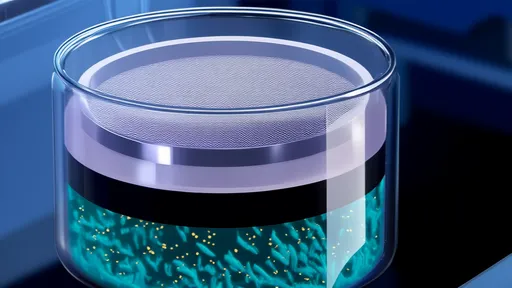
At the heart of every MFC lies a delicate dance between bacteria and electrodes. Certain species of electroactive bacteria, such as Geobacter and Shewanella, possess the remarkable ability to transfer electrons extracellularly during their metabolic processes. When these microbes break down organic matter in the anode chamber, they release electrons that travel through an external circuit to the cathode, creating an electric current. The efficiency of this energy conversion process depends on numerous interconnected factors that researchers are still working to optimize.

One of the most significant challenges in MFC technology stems from the inherent limitations of bacterial metabolism. Even under ideal conditions, microbes cannot convert all the chemical energy in their substrate into electrical energy. A substantial portion gets lost as heat or gets diverted toward bacterial growth and maintenance. The theoretical maximum efficiency of MFCs, based on thermodynamic principles, rarely exceeds 50%, and practical systems typically achieve far less. Recent studies suggest that cutting-edge MFC designs are reaching conversion efficiencies around 30-40%, though these numbers vary dramatically depending on the specific configuration and operating conditions.

Electrode design has emerged as a crucial factor influencing MFC performance. Traditional carbon-based electrodes, while cost-effective, often fail to provide the optimal surface area and conductivity needed for efficient electron transfer. Researchers are experimenting with novel materials like graphene-coated electrodes and three-dimensional nanostructures that dramatically increase the available surface area for bacterial colonization. These advanced materials not only improve electron transfer rates but also enhance the overall power density of the system. However, the trade-off between performance gains and material costs remains a significant consideration for practical applications.

The choice of proton exchange membrane (PEM) represents another critical efficiency determinant in MFC design. This component separates the anode and cathode chambers while allowing protons to pass through, completing the electrical circuit. Conventional PEMs, borrowed from chemical fuel cell technology, often prove too expensive or inefficient for microbial systems. Bioengineers are developing alternative membranes using cheaper materials like ceramics or even biological polymers that show promise in reducing internal resistance while maintaining proper ion selectivity.

Operational parameters exert tremendous influence on MFC efficiency. Factors such as pH balance, temperature, substrate concentration, and hydraulic retention time must be carefully controlled to maintain optimal microbial activity. Many studies demonstrate that moderate thermophilic conditions (around 40-50°C) can enhance reaction kinetics and improve overall system performance. Similarly, maintaining the right balance of organic loading is crucial—too little substrate starves the bacteria, while too much can lead to clogging or the growth of inefficient fermentative microbes that don't contribute to electricity generation.

Scaling up MFC systems introduces additional efficiency challenges that aren't apparent in laboratory settings. While small-scale reactors might show promising results, increasing their size often leads to disproportionate losses in performance. This scaling effect stems from increased internal resistance, uneven substrate distribution, and difficulties in maintaining uniform conditions throughout larger volumes. Some innovative approaches to this problem involve designing modular systems where multiple smaller MFC units operate in parallel rather than attempting to build single, massive reactors.

The microbial community composition plays an underappreciated yet vital role in determining MFC efficiency. Pure cultures of known electrogenic bacteria often underperform compared to carefully selected mixed communities. In these complex ecosystems, different species perform complementary functions—some excel at breaking down complex organics, while others specialize in electron transfer. Maintaining the right balance within these microbial consortia requires careful system management, as shifts in population dynamics can dramatically affect power output. Recent metagenomic studies are helping researchers understand these interactions at a fundamental level, potentially leading to better community engineering strategies.

One promising avenue for improving MFC efficiency lies in genetic engineering of the microbes themselves. By modifying bacterial genomes to enhance their electron transfer capabilities or redirect metabolic pathways toward more efficient energy extraction, scientists hope to create "superbug" strains optimized for electricity generation. While this approach raises certain ethical and ecological concerns, the potential efficiency gains could make MFCs competitive with conventional energy sources for specific applications.

The integration of MFCs with other treatment processes presents interesting opportunities for overall system efficiency. Some researchers are exploring hybrid systems where microbial electrolysis cells or phototrophic organisms complement traditional MFCs. These combinations can sometimes extract more useful energy from the same organic input while accomplishing additional treatment objectives. For instance, coupling MFCs with algae cultivation can simultaneously generate electricity, produce biomass for biofuels, and remove nutrients from wastewater.

Economic analyses suggest that current MFC technologies still struggle to compete with conventional energy sources on pure cost terms. However, when considering their additional benefits—such as wastewater treatment capability, lower carbon footprint, and potential resource recovery—the overall value proposition becomes more compelling. As research continues to push the boundaries of MFC efficiency, these systems may find niche applications where their unique advantages outweigh their current limitations, perhaps in remote locations or specialized industrial settings where conventional power is unavailable or prohibitively expensive.

Looking toward the future, the path to improved MFC efficiency will likely require a combination of materials science, microbial ecology, and process engineering breakthroughs. While significant challenges remain, the potential environmental benefits and the elegant biological principles underlying this technology continue to drive research forward. As our understanding of the complex interactions between microbes and electrodes deepens, we may soon see microbial fuel cells transition from laboratory curiosities to practical components of our renewable energy infrastructure.

Recommend Posts
IT

Cognitive Load in Remote Teams

By /Aug 15, 2025

The rise of remote work has fundamentally altered how teams collaborate across distances. While this shift offers unprecedented flexibility, it also introduces unique cognitive challenges that traditional office environments rarely encountered. Remote teams now grapple with invisible barriers that impact how information is processed, shared, and retained across digital channels.
IT

Brain-Computer Interface Thought Classification Speed

By /Aug 15, 2025

The field of brain-computer interfaces (BCIs) has witnessed remarkable advancements in recent years, particularly in the domain of thought classification speed. Researchers and engineers are pushing the boundaries of what's possible, enabling faster and more accurate interpretation of neural signals. This progress holds immense potential for applications ranging from medical rehabilitation to augmented communication systems.
IT

Self-Healing Circuit Assessment

By /Aug 15, 2025

The field of self-healing circuits has witnessed remarkable advancements in recent years, with researchers developing innovative methods to evaluate the effectiveness of autonomous repair mechanisms. As electronic devices become increasingly complex and integral to modern life, the ability of circuits to recover from damage without human intervention presents a paradigm shift in reliability engineering. This article explores the cutting-edge techniques and challenges in assessing the healing performance of self-repairing circuits.
IT

DBA Transformation in the AIGC Era

By /Aug 15, 2025

The rapid evolution of Artificial Intelligence Generated Content (AIGC) is reshaping industries across the globe, and the role of Database Administrators (DBAs) is no exception. As organizations increasingly adopt AI-driven solutions, DBAs find themselves at a crossroads—adapt or risk obsolescence. The transformation isn’t just about learning new tools; it’s about redefining their value in an era where automation and machine learning are becoming the backbone of data management.
IT

Myoelectric Gesture Power Consumption Optimization

By /Aug 15, 2025

The field of human-computer interaction has witnessed remarkable advancements in recent years, particularly in the domain of gesture recognition. Among the various technologies enabling this progress, electromyography (EMG)-based gesture control stands out as a promising approach. However, as with any wearable or embedded system, power consumption remains a critical challenge that researchers and engineers must address to ensure practical, long-lasting implementations.
IT

Ultra-Fusion AI Computing Power Fragments Organization

By /Aug 15, 2025

The rapid evolution of AI workloads has ushered in a new era of computational demands, pushing traditional infrastructure models to their limits. Hyperconverged systems, once hailed as the silver bullet for IT simplification, now face an unexpected challenge: AI-driven compute fragmentation. This phenomenon is reshaping how enterprises approach their data center strategies, forcing a reevaluation of resource allocation in an increasingly AI-centric world.
IT

The Effectiveness of Incentives in Open Source Communities

By /Aug 15, 2025

The sustainability of open source communities has become a critical discussion point in software development circles. While the ideological foundations of open source emphasize collaboration and free access, maintaining contributor engagement requires sophisticated incentive structures that go beyond pure altruism.
IT

DNA Storage Parallelization in Writing Process

By /Aug 15, 2025

The field of DNA data storage has reached an inflection point where researchers are no longer asking if biological molecules can serve as viable archival media, but rather how quickly and at what scale we can implement this revolutionary technology. At the heart of this transition lies the critical challenge of write parallelization - the ability to simultaneously encode digital information across multiple DNA strands without compromising data integrity or synthesis accuracy.
IT

Vector Database Similarity Threshold

By /Aug 15, 2025

The concept of similarity thresholds in vector databases has emerged as a critical consideration in modern data retrieval systems. As organizations increasingly rely on vector embeddings to power search, recommendation, and classification systems, understanding how to properly set and utilize similarity thresholds becomes paramount for achieving optimal performance.
IT

Chemical Stability of Immersion Cooling Fluids

By /Aug 15, 2025

Immersion cooling has emerged as a revolutionary approach in thermal management, particularly for high-density computing applications like data centers and cryptocurrency mining. At the heart of this technology lies the immersion cooling fluid, a specialized dielectric liquid that directly contacts electronic components to dissipate heat. While much attention is paid to thermal conductivity and viscosity, the chemical stability of these fluids often becomes the unsung hero determining long-term system reliability.
IT

Microbial Fuel Cell Efficiency

By /Aug 15, 2025

The quest for sustainable energy solutions has led scientists to explore unconventional avenues, one of which is the microbial fuel cell (MFC). These fascinating devices harness the metabolic activity of microorganisms to generate electricity, offering a glimpse into a future where wastewater treatment plants could double as power stations. While the concept is elegant in its simplicity, the efficiency of MFCs remains a critical hurdle preventing widespread adoption.
IT

Cross-device Context-Aware Latency

By /Aug 15, 2025

The concept of cross-device context-aware latency is rapidly gaining traction in the tech industry as seamless connectivity becomes a non-negotiable expectation for modern users. Unlike traditional latency issues that focus solely on network performance, this emerging challenge encompasses the synchronization delays between multiple devices operating within an interconnected ecosystem. From smart homes to wearable tech and industrial IoT, the frictionless transfer of contextual data across devices is now a critical component of user experience.
IT

Taint Analysis of Smart Contracts

By /Aug 15, 2025

As blockchain technology continues to evolve, smart contracts have become the backbone of decentralized applications. However, with their increasing adoption comes a surge in vulnerabilities and exploits. One of the most promising techniques to address these security challenges is taint analysis. This method, borrowed from traditional software security, is now being adapted to the unique environment of blockchain and smart contracts.
IT

Ultrasonic Tactile Intensity Control

By /Aug 15, 2025

The realm of haptic feedback has witnessed a groundbreaking evolution with the advent of ultrasound-based tactile intensity control. This technology, which manipulates ultrasonic waves to create tangible sensations in mid-air, is redefining how humans interact with digital interfaces. Unlike traditional haptic systems that rely on physical contact, ultrasound haptics offers a touchless experience, enabling users to feel textures, shapes, and even pressure without direct mechanical stimulation.
IT

Anti-Condensation Design for Edge Devices

By /Aug 15, 2025

In the realm of industrial automation, telecommunications, and IoT deployments, edge devices often operate in harsh environmental conditions where temperature fluctuations and humidity pose significant challenges. One of the most persistent yet frequently overlooked threats is condensation, which can lead to corrosion, electrical shorts, and premature device failure. As these devices increasingly handle mission-critical tasks, designing robust anti-condensation mechanisms has become a non-negotiable aspect of product development.
IT

Neuromorphic Taste Encoding

By /Aug 15, 2025

The human sense of taste represents one of nature's most sophisticated chemical detection systems, capable of distinguishing subtle molecular differences with remarkable efficiency. Recent advances in neuromorphic engineering have begun unraveling the complex neural coding principles behind gustatory perception, opening new frontiers in artificial intelligence and human-machine interfaces.
IT

Digital Olfactory Concentration Perception

By /Aug 15, 2025

The concept of digital olfaction – the ability to detect, transmit, and recreate scents through technology – has long been relegated to the realm of science fiction. However, recent advancements in sensor technology, machine learning, and material science have brought us closer than ever to achieving a functional digital sense of smell. At the heart of this breakthrough lies the challenge of quantifying scent concentration perception, a complex interplay of chemistry, biology, and data science that could revolutionize industries from healthcare to entertainment.
IT

Thermal Management for Optoelectronic Co-Packaged Systems

By /Aug 15, 2025

The rapid evolution of high-performance computing and data centers has brought thermal management to the forefront of technological challenges, particularly in the context of photonic-electronic co-packaging. As the demand for faster data transmission and lower latency grows, integrating optical interconnects with traditional electronic circuits becomes essential. However, this convergence introduces significant thermal complexities that require innovative solutions to maintain reliability and efficiency.
IT

Terahertz Ancient Manuscript Ink Recognition

By /Aug 15, 2025

The world of cultural heritage preservation has entered an exciting new era with the advent of terahertz technology for ancient ink identification. This groundbreaking approach is revolutionizing how scholars and conservators analyze historical manuscripts without causing any damage to these priceless artifacts.
IT

Technology Decision Regret Model

By /Aug 15, 2025

The concept of regret in decision-making has long fascinated psychologists, economists, and business leaders alike. When it comes to technology, the stakes are often higher, the outcomes more uncertain, and the repercussions longer-lasting. The Technology Decision Regret Model provides a framework for understanding how individuals and organizations grapple with the consequences of their tech-related choices. Unlike traditional models that focus solely on rational cost-benefit analysis, this approach acknowledges the emotional and psychological toll of suboptimal decisions in a rapidly evolving digital landscape.