The field of self-healing circuits has witnessed remarkable advancements in recent years, with researchers developing innovative methods to evaluate the effectiveness of autonomous repair mechanisms. As electronic devices become increasingly complex and integral to modern life, the ability of circuits to recover from damage without human intervention presents a paradigm shift in reliability engineering. This article explores the cutting-edge techniques and challenges in assessing the healing performance of self-repairing circuits.
Understanding the Fundamentals of Self-Healing Circuit Assessment
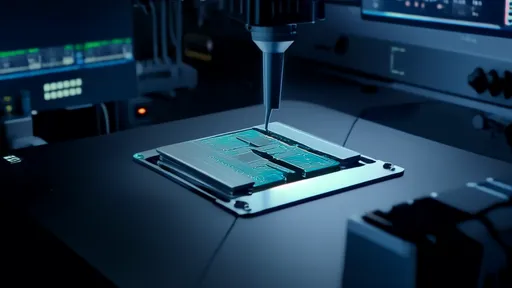
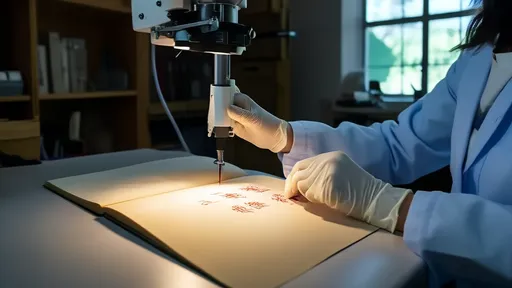
Evaluating the healing capabilities of self-repairing circuits requires a comprehensive approach that goes beyond simple continuity tests. Researchers must consider multiple factors including the speed of recovery, the extent of damage that can be healed, and the long-term stability of repaired connections. The assessment process typically involves intentionally damaging circuits under controlled conditions and monitoring the autonomous repair process using advanced imaging techniques and electrical measurements.
Microscopy methods such as scanning electron microscopy (SEM) and atomic force microscopy (AFM) have proven invaluable for visualizing the healing process at nanometer scales. These tools allow scientists to observe the migration of healing agents and the reformation of conductive pathways in real-time. Electrical characterization techniques, including four-point probe measurements and impedance spectroscopy, provide quantitative data on the restoration of conductivity following damage events.
The Challenge of Standardizing Healing Metrics
One of the most significant hurdles in the field is establishing standardized metrics for comparing healing performance across different material systems and circuit designs. While some researchers focus on percentage conductivity recovery, others emphasize the number of healing cycles a material can endure before failure. The lack of uniform testing protocols makes it difficult to objectively compare results from different research groups and slows the commercialization of these technologies.
Environmental factors add another layer of complexity to healing assessment. Temperature, humidity, and mechanical stress can all influence healing performance, requiring comprehensive testing under various conditions. Accelerated aging tests are particularly important for determining whether healed circuits can maintain their performance over extended periods in real-world applications.
Advanced Characterization Techniques
Recent developments in in-situ characterization have revolutionized healing assessment. Combining electrical measurements with spectroscopic techniques such as Raman spectroscopy or X-ray photoelectron spectroscopy (XPS) provides insights into both the electrical and chemical aspects of the healing process. This multimodal approach helps researchers understand not just whether a circuit heals, but how the healing mechanism works at molecular levels.
Machine learning algorithms are increasingly being employed to analyze the vast amounts of data generated during healing experiments. These tools can identify subtle patterns in healing behavior that might escape human observation, potentially leading to the discovery of more efficient healing mechanisms. The integration of artificial intelligence with experimental data analysis represents a significant leap forward in assessment capabilities.
Real-World Performance Evaluation
Laboratory tests, while valuable, cannot fully replicate the complex operating conditions that circuits face in actual applications. Researchers are developing new testing methodologies that subject self-healing circuits to realistic stress scenarios, including thermal cycling, mechanical flexing, and exposure to corrosive environments. These tests provide crucial data about how healing performance translates from controlled lab environments to practical implementations.
Field testing represents the ultimate validation of healing effectiveness. Several research groups have begun deploying prototype self-healing circuits in harsh environments, from industrial settings to space applications. The data collected from these real-world trials is invaluable for refining both the materials and the assessment techniques used in laboratory settings.
Future Directions in Healing Assessment
As the field matures, researchers are shifting focus from simply demonstrating healing capability to optimizing healing efficiency and reliability. New assessment protocols are being developed to evaluate not just whether a circuit can heal, but how quickly it can do so while maintaining signal integrity. This requires sophisticated testing setups that can precisely control damage parameters and simultaneously monitor multiple performance metrics.
The development of self-healing circuits for high-frequency applications presents unique assessment challenges. At microwave and millimeter-wave frequencies, even minor imperfections in healed circuits can significantly impact performance. Specialized testing equipment and methodologies are being created to evaluate healing effectiveness in these demanding applications where traditional DC resistance measurements provide insufficient information.
Ultimately, the goal of healing assessment is not just to quantify performance but to provide feedback for improving material formulations and circuit designs. As assessment techniques become more sophisticated, they will play a crucial role in guiding the development of next-generation self-healing electronics capable of unprecedented reliability in the face of inevitable damage and degradation.

By /Aug 15, 2025

By /Aug 15, 2025
By /Aug 15, 2025

By /Aug 15, 2025

By /Aug 15, 2025

By /Aug 15, 2025

By /Aug 15, 2025

By /Aug 15, 2025

By /Aug 15, 2025
By /Aug 15, 2025
By /Aug 15, 2025

By /Aug 15, 2025

By /Aug 15, 2025
By /Aug 15, 2025
By /Aug 15, 2025
By /Aug 15, 2025
By /Aug 15, 2025
By /Aug 15, 2025
By /Aug 15, 2025

By /Aug 15, 2025