The field of human-computer interaction has witnessed remarkable advancements in recent years, particularly in the domain of gesture recognition. Among the various technologies enabling this progress, electromyography (EMG)-based gesture control stands out as a promising approach. However, as with any wearable or embedded system, power consumption remains a critical challenge that researchers and engineers must address to ensure practical, long-lasting implementations.
Understanding EMG-Based Gesture Recognition
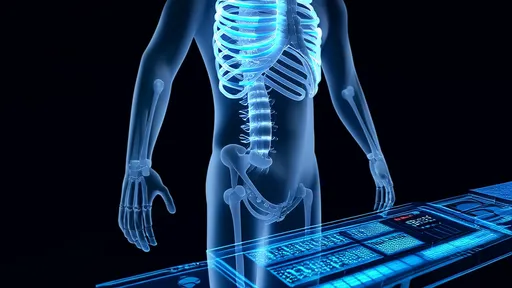
Electromyography measures the electrical activity produced by skeletal muscles during contraction. When applied to gesture recognition, surface EMG sensors placed on the skin can detect subtle muscle movements and translate them into digital commands. This technology offers several advantages over camera-based or inertial measurement unit (IMU)-based systems, including higher precision for certain gestures and the ability to detect pre-movement muscle activation.
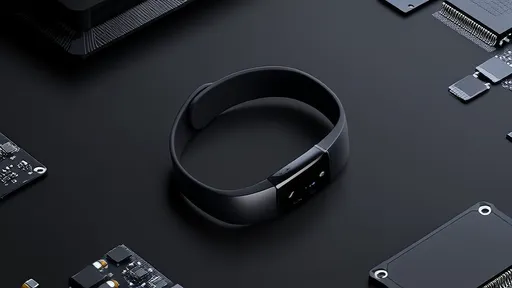
The power demands of EMG systems stem from multiple components: the analog front-end for signal acquisition, the processing unit for feature extraction and classification, and the wireless communication module for transmitting commands. Each of these subsystems presents unique optimization opportunities that can significantly impact the overall energy efficiency of the device.
Analog Front-End Optimization Strategies
The analog front-end, responsible for capturing the microvolt-level EMG signals, traditionally consumes a substantial portion of the system's power budget. Recent developments in low-power instrumentation amplifiers and programmable gain amplifiers have enabled significant reductions in this area. Some researchers have adopted adaptive biasing techniques that adjust the amplifier's performance characteristics based on the quality of incoming signals, effectively trading off between noise performance and power consumption when possible.
Another promising approach involves the implementation of compressive sensing in the analog domain. By acquiring signals in a compressed form rather than at full Nyquist rates, systems can reduce the amount of data that needs processing while maintaining adequate signal fidelity for gesture classification. This technique not only lowers the power consumption of the front-end but also reduces the computational load on downstream components.
Processing and Classification Efficiency
The computational aspects of EMG gesture recognition present another significant opportunity for power optimization. Traditional approaches that rely on continuous signal processing and complex machine learning models can be prohibitively power-hungry for wearable applications. Emerging solutions focus on several key strategies to address this challenge.
Event-driven processing has gained traction as an effective power-saving paradigm. Instead of continuously analyzing EMG signals, these systems remain in a low-power state until detecting muscle activity that might precede a gesture. Only then does the system activate more sophisticated processing pipelines. This approach mirrors the energy-efficient operation of biological nervous systems and can dramatically extend battery life.
Algorithm optimization represents another crucial frontier. Researchers are developing specialized gesture classification algorithms that balance accuracy with computational complexity. Techniques such as feature selection optimization, where only the most discriminative EMG features are computed, and the use of lightweight neural network architectures tailored for embedded deployment are showing promising results in reducing processing power requirements.
Wireless Communication Considerations
For many EMG gesture control applications, wireless data transmission constitutes a major power drain. The choice of communication protocol significantly impacts energy efficiency, with newer standards like Bluetooth Low Energy (BLE) offering substantial improvements over classic Bluetooth. However, even within BLE implementations, careful parameter selection and transmission scheduling can yield additional savings.
Advanced systems are implementing context-aware transmission strategies that adapt data rates and transmission power based on the user's activity and environmental conditions. Some implementations even employ local processing to reduce the amount of data that needs transmission, sending only gesture classification results rather than raw or partially processed EMG signals.
System-Level Power Management
Beyond optimizing individual components, holistic system-level approaches are proving essential for maximizing energy efficiency. Dynamic voltage and frequency scaling (DVFS) techniques allow processors to operate at just the necessary performance level for the current workload. Similarly, intelligent power gating strategies can shut down unused subsystems when they're not needed.
Another innovative approach involves leveraging the predictable nature of human gestures to anticipate power needs. By analyzing usage patterns and the timing between gestures, systems can enter low-power states during expected periods of inactivity while maintaining responsiveness when needed. This predictive power management can significantly extend operational time between charges.
Energy Harvesting Integration
Looking toward the future, researchers are exploring ways to supplement battery power with energy harvesting techniques. While EMG systems typically can't rely solely on harvested energy, supplementary power from body heat, motion, or even the EMG signals themselves can help extend battery life. Recent prototypes have demonstrated the feasibility of such hybrid power systems, though challenges remain in achieving consistent and reliable energy harvesting in real-world conditions.
The integration of energy-aware algorithms that adapt their behavior based on available power represents another exciting development. These systems might, for instance, reduce gesture recognition accuracy when operating on harvested energy to conserve power, then return to full accuracy when battery levels permit.
Future Directions and Challenges
As EMG-based gesture control moves toward broader adoption, power optimization will remain a central focus of research and development. Emerging technologies like ultra-low-power neuromorphic processors and advanced energy storage solutions promise to further push the boundaries of what's possible. However, challenges such as maintaining performance across diverse user populations and environmental conditions while minimizing power consumption will require continued innovation.
The ultimate goal remains the development of EMG gesture recognition systems that are both highly responsive and capable of operating for extended periods without recharging. Achieving this balance will be crucial for enabling always-available, unobtrusive gesture control in applications ranging from consumer electronics to medical devices and industrial interfaces. As optimization techniques mature and new technologies emerge, we move closer to realizing the full potential of this intuitive human-computer interaction paradigm.

By /Aug 15, 2025

By /Aug 15, 2025
By /Aug 15, 2025

By /Aug 15, 2025
By /Aug 15, 2025

By /Aug 15, 2025

By /Aug 15, 2025

By /Aug 15, 2025
By /Aug 15, 2025

By /Aug 15, 2025

By /Aug 15, 2025

By /Aug 15, 2025

By /Aug 15, 2025
By /Aug 15, 2025
By /Aug 15, 2025

By /Aug 15, 2025

By /Aug 15, 2025
By /Aug 15, 2025

By /Aug 15, 2025

By /Aug 15, 2025